| Folding Carton Box | Flat-packed paperboard box with pre-creased folding panels and tuck or lock tabs. | Folding boxboard, recycled paperboard, or virgin-fiber paperboard. | Retail cookies, everyday gifting, subscription packs, and high-volume orders. | Medium; suitable for dry cookies when combined with an inner bag, tray, or liner. | Efficient for shipping in flat form; paper-based versions are widely recyclable where local systems accept them. | Printed graphics, window panels, embossing, foil effects, die-cut shapes, and custom inserts. | Confirm paper weight, food-contact suitability, color consistency, and flat-pack shipping efficiency. |
| Rigid Setup Box | Pre-assembled, thick-walled box that keeps its shape during presentation and handling. | Rigid paperboard wrapped with printed paper, recycled paper, or textile-style covering material. | Premium gifts, seasonal assortments, luxury cookie collections, and corporate gifting. | High; strong panels offer good crush resistance and presentation quality. | Uses more material and shipping volume than folding cartons; recyclable construction depends on coatings, magnets, and mixed materials. | Removable lids, hinged lids, ribbons, compartments, foil stamping, textured paper, and custom inserts. | Evaluate dimensional weight, storage space, assembly status, and separation of non-paper components for recycling. |
| Window Cookie Box | Paperboard box with a transparent opening on the lid or front panel. | Paperboard with cellulose film or conventional plastic window film. | Decorated cookies, visible assortments, bakery counter sales, and gift presentation. | Medium; visibility is excellent, but the window can reduce barrier performance and structural strength. | Cellulose windows may support a paper-focused design; plastic windows may need removal before recycling depending on local rules. | Window shape, printed artwork, die-cut patterns, inserts, labels, and seasonal graphics. | Check window-film clarity, grease resistance, food-contact documentation, and recycling instructions for the destination market. |
| Drawer or Slide Box | Inner tray slides into an outer sleeve, creating a layered opening experience. | Paperboard, rigid board, recycled board, or a combination of board and paper sleeves. | Premium gift sets, tasting collections, limited editions, and multi-flavor assortments. | Medium to high; the sleeve protects the tray and helps reduce product movement. | Can be mainly paper-based, but ribbons, magnets, foam, and laminated finishes may complicate recycling. | Printed sleeves, pull ribbons, dividers, custom tray sizes, textured finishes, and interior messaging. | Check smooth opening performance, tolerance control, assembly labor, and packing speed for large orders. |
| Tin Cookie Box | Reusable metal container with a fitted or hinged lid. | Tinplate steel, with food-contact coatings or printed exterior decoration. | Long-term keepsakes, premium gift sets, travel assortments, and products needing strong protection. | High; metal provides strong resistance to crushing and repeated use. | Metal is durable and recyclable, although production weight, coatings, and transport emissions should be considered. | Printed decoration, embossed surfaces, shaped lids, internal trays, and custom metal forms. | Review container weight, rust protection, lid fit, import duties, stacking efficiency, and food-contact compliance. |
| Kraft Paper Window Box | Natural-look folding carton, usually with a tuck-top closure and viewing window. | Brown kraft paperboard, recycled board, and paper or film window material. | Artisan cookies, organic-positioned products, farmers' markets, and eco-conscious retail packaging. | Medium; appropriate for dry cookies with a sealed inner pack or food-safe liner. | Unbleached paper can reduce the need for heavy surface decoration; window and grease-barrier choices affect recyclability. | One- or two-color printing, stamps, labels, die-cut windows, paper handles, and simple inserts. | Confirm grease resistance, print contrast on brown board, moisture protection, and local recycling acceptance. |
| Tube or Cylindrical Box | Round or polygonal container with a removable lid, shoulder fit, or rolled-paper construction. | Spiral-wound paperboard, composite board, metal ends, or paper lids. | Stacked cookies, gift tubes, specialty shapes, online promotions, and distinctive shelf presentation. | Medium to high; the cylindrical wall can resist side pressure, but cookie movement must be controlled. | Paper tubes may be recyclable when made without incompatible liners or mixed-material closures. | Custom diameter and height, full-surface printing, end labels, paper seals, and internal separators. | Measure pallet utilization carefully and confirm that the internal diameter prevents breakage during international transit. |
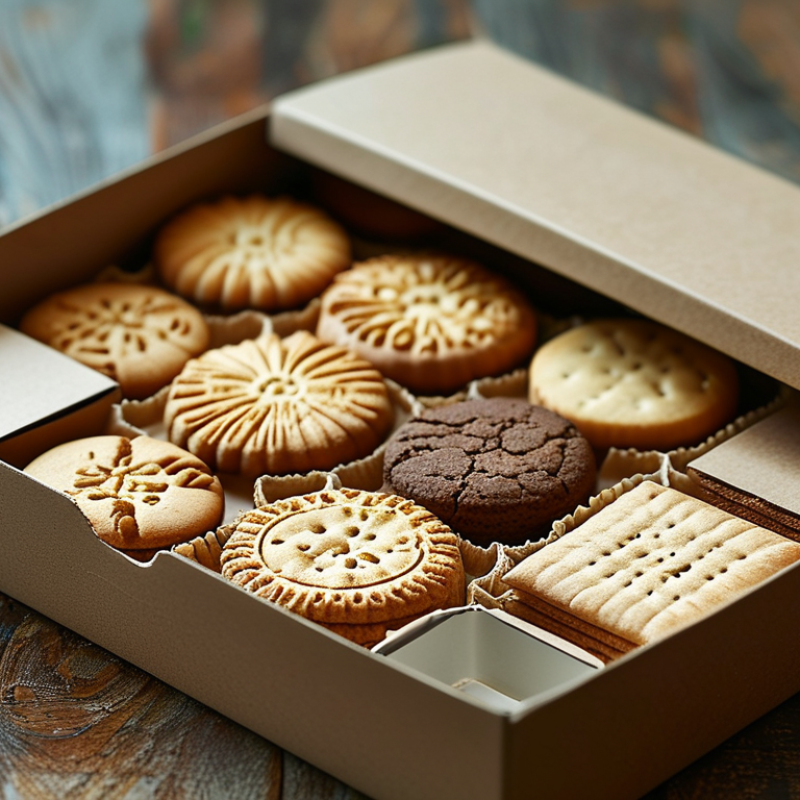
| Compartment Cookie Box | Box with fixed or removable dividers separating flavors, shapes, or decorated pieces. | Paperboard, rigid board, molded fiber, or food-safe plastic trays. | Mixed assortments, fragile decorated cookies, allergen separation, and premium tasting boxes. | High when dividers fit tightly and cookies are individually wrapped or sealed. | Fiber dividers can reduce plastic use; mixed-material trays and laminated components may affect recyclability. | Custom cavity layout, printed dividers, flavor labels, inserts, and removable trays. | Confirm cavity dimensions, allergen-control procedures, packing labor, and protection against cross-contact or flavor transfer. |
| Mailer Cookie Box | Self-locking corrugated or strong paperboard shipper designed for parcel delivery. | Corrugated fiberboard, solid board, paper cushioning, and optional paper-based inserts. | E-commerce orders, direct-to-consumer delivery, subscription shipments, and small-batch exports. | High when correctly sized and combined with internal cushioning or a sealed food pack. | Paper-based protective structures can reduce plastic void fill; right-sizing helps lower material and transport waste. | Exterior printing, locking tabs, tear strips, inserts, return features, and branded interior panels. | Test drop, vibration, compression, humidity, and temperature conditions for the intended shipping route. |
| Molded Fiber Cookie Tray Box | Paperboard or carton sleeve combined with a shaped fiber tray that holds individual cookies. | Molded pulp or molded fiber, paperboard sleeve, and water- or grease-resistant treatment where required. | Fragile cookies, gift assortments, plastic-reduction programs, and structured retail packs. | Medium to high; individual cavities help reduce contact and movement. | Fiber components can be renewable and recyclable or compostable only where the specific material and local facilities support those claims. | Custom cavity shapes, sleeves, labels, printed inserts, and tray textures. | Verify food-contact safety, moisture and grease resistance, fiber smoothness, dimensional accuracy, and destination-market disposal rules. |