2026 Top Foil Container Trends for Global Buyers?
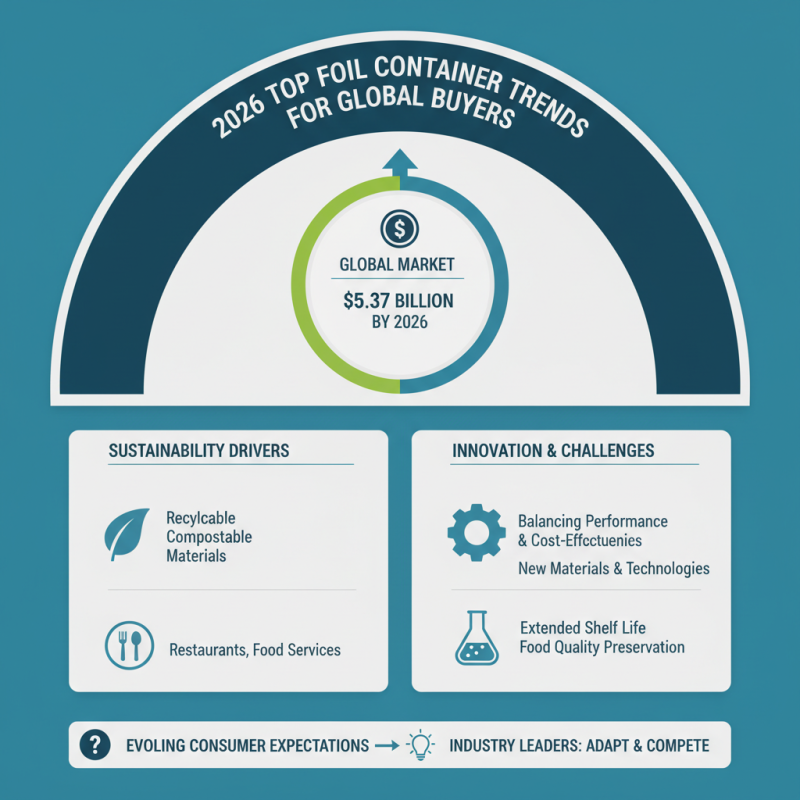
As the demand for sustainability rises, the Foil Container industry faces exciting transformations. According to a recent report by Grand View Research, the global foil container market is projected to reach $5.37 billion by 2026. This growth highlights the increasing popularity of foil containers among restaurants, food services, and packaging industries.
"Foil containers offer unique advantages in preserving food quality and extending shelf life," states Dr. Emily Foster, an expert in food packaging technology. Her insights underscore the importance of innovation in creating sustainable packaging solutions. As buyers seek eco-friendly materials, the adoption of recyclable and compostable foil containers becomes critical.
However, challenges remain in balancing performance and sustainability. Manufacturers need to refine their processes while ensuring cost-effectiveness. Exploring new materials and technologies will be essential in meeting evolving consumer expectations. This ongoing evolution in the foil container landscape poses questions that industry leaders must address to remain competitive.
Emergence of Eco-Friendly Foil Containers in 2026 Market Trends
The food packaging landscape is shifting towards sustainability, particularly with foil containers. In 2026, eco-friendly options are gaining traction. These containers minimize environmental impact while maintaining strength and convenience. Manufacturers are adopting new materials that reduce carbon footprints. Biodegradable coatings and recycled aluminum are on the rise. This trend reflects a growing demand for more sustainable practices in the food industry.
The consumer shift is evident. Buyers are more informed and concerned about sustainability. There is a push for transparency in sourcing and production methods. However, not all eco-friendly products perform equally. Some may lack durability or usability. This inconsistency can deter restaurants and caterers. Innovators need to address these challenges if they want to succeed in the market. Balancing performance with environmental friendliness remains a critical task.
The rise of eco-friendly foil containers is promising. Yet, it reveals gaps in understanding sustainable practices. Education and awareness are necessary for both consumers and producers. They must navigate the complex landscape of eco-initiatives. As more businesses embrace this trend, a commitment to quality and sustainability will be essential. Only then can they truly meet the expectations of a conscientious global market.
2026 Top Foil Container Trends for Global Buyers
| Trend Category | Description | Projected Growth (%) | Consumer Preference |
| Sustainable Materials | Rise in demand for bio-based and recyclable foil containers. | 25% | High engagement |
| Customization | Increased interest in customized and branded foil containers. | 30% | Moderate engagement |
| Health-Conscious Options | Growing preference for containers suitable for health-focused meals. | 20% | High engagement |
| Convenience | Trends towards ready-to-eat meals requiring easy-to-use containers. | 15% | Very high engagement |
| Innovative Designs | Emerging focus on aesthetic and functional design of foil containers. | 18% | Moderate engagement |
Growth of Biodegradable Foil Container Materials and Their Impact
The rise of biodegradable foil container materials is reshaping the packaging industry. As global awareness of environmental issues grows, consumers demand sustainable options. According to a recent report, the biodegradable packaging market is projected to reach $600 billion by 2027. This indicates a paradigm shift, driven largely by consumer behavior and regulatory pressures.
Biodegradable materials, such as plant-based plastics, are emerging as viable alternatives. They offer similar functionalities to traditional foil containers but break down more efficiently in natural environments. However, the production of these materials often faces challenges. Material quality, cost, and end-of-life options require careful consideration. As companies strive for sustainable solutions, they need to balance innovation with responsibility.
Tip: Consider using biodegradable options for takeaway packaging. Educate your customers about proper disposal methods to enhance their effectiveness.
Innovations in this sector are promising but can be inconsistent. Some biodegradable containers still contain non-degradable elements, which can mislead consumers. Continuous improvement and transparency are essential for industry credibility.
Tip: Stay informed about the latest biodegradable materials and their certifications. Make sure your chosen products meet the necessary environmental standards.
Technological Innovations in Foil Container Manufacturing Processes
In recent years, the manufacturing of foil containers has witnessed significant technological advancements. These innovations not only enhance production efficiency but also improve the quality of the end product. For instance, automated processes reduce human error and increase output, fulfilling a growing market demand. Automated precision cutting and forming offer more uniform products, which is crucial in the competitive packaging industry.
Additionally, enhancements in recycling technology have made an impact. New methods allow manufacturers to reuse scrap metal efficiently. This not only lowers production costs but also supports sustainability efforts. However, this transition to eco-friendly practices is still a work in progress. Some manufacturers struggle with the implementation of these technologies while ensuring product integrity.
The ongoing research in smart materials is exciting yet poses challenges. Smart foil could respond to temperature changes or moisture levels. While promising, it requires further testing to ensure safety and functionality. This represents a paradigm shift in packaging, but the balance between innovation and practicality is essential for success. Embracing these technologies will benefit both producers and consumers, but the journey is filled with uncertainties.
Consumer Preferences Driving Customizable Foil Container Solutions
The rise of customizable foil container solutions reflects changing consumer preferences. Today's buyers seek versatility and unique designs. They want packaging that stands out and meets their specific needs. Foil containers can be tailored in size, shape, and even printing. This flexibility attracts businesses looking to enhance their brand identity.
Sustainability is also a key factor in consumer choices. Many buyers prefer eco-friendly materials that minimize environmental impact. Foil containers often offer recyclability, appealing to the environmentally conscious market. However, not all products are created equally. Companies must ensure their materials are ethically sourced and environmentally friendly. This can be a challenge, leading to questions about sourcing practices and lifecycle impacts.
Customization can come with its own set of complications. Consumers may desire intricate designs that require more resources. Balancing creative demands with production efficiency can be difficult. It forces manufacturers to rethink their processes and invest in better technology. While the trends shift, maintaining high quality remains essential. Companies must navigate these changes while staying true to their values and mission.
Market Analysis: Key Players and Market Share Insights in 2026
The foil container market is rapidly evolving, with significant trends emerging as we approach 2026. Market analysis indicates that various key players are reshaping the industry landscape. Health-conscious consumers are driving demand for sustainable packaging options. This push is influencing manufacturers to adopt eco-friendly materials and practices. The rise in takeout services also drives growth in this sector.
Key players in the foil container market are expanding their product lines to include biodegradable and recyclable containers. This shift could create competition and potentially impact pricing strategies. However, not all companies are adapting at the same pace. Some may struggle to meet new environmental standards, leading to market share fluctuations. The dynamics between innovation and compliance are critical.
As the market matures, regional differences will also play a role. North America might lead in adopting innovative designs, while Asia-Pacific could focus on affordability and volume. These variations present opportunities and challenges for businesses. Establishing a firm foothold as consumer preferences shift will require agility and foresight. The next few years will test the resilience of established and emerging brands alike.
2026 Top Foil Container Trends