How to Choose the Best Thermoformed Plastic Trays for Your Needs?
Choosing the right thermoformed plastic trays is crucial for various industries. Experts emphasize their importance. According to Dr. Emily Grant, a leading specialist in plastic packaging, “The right thermoformed plastic trays can greatly enhance efficiency and sustainability.” Her insight highlights the need for informed choices.
When selecting thermoformed plastic trays, consider material durability and design versatility. The most suitable trays should align with your specific requirements. In the fast-paced packaging industry, small decisions matter. High-quality trays can reduce waste and optimize space. They can also improve product protection during transport.
It is essential to reflect on the factors influencing your selection. Cost, environmental impact, and functionality are vital considerations. Assessing these criteria ensures the chosen trays meet your standards. A poorly made tray can lead to inefficiencies. Therefore, thoughtful deliberation can lead to better outcomes.

Understanding Thermoformed Plastic Trays and Their Applications
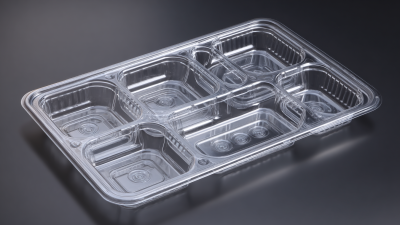
Thermoformed plastic trays are essential in various industries. These trays, made from plastic sheets heated and molded, serve critical functions in packaging, transporting, and displaying products. According to a report by Smithers Pira, the global market for thermoformed packaging is projected to reach $32 billion by 2025. This growth is driven by increased demand across sectors like food, medical, and retail.
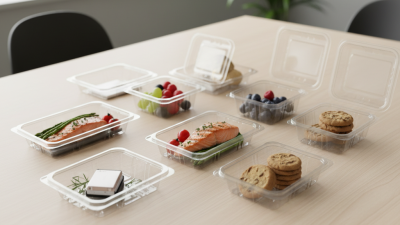
The versatility of thermoformed trays makes them ideal for many applications. They can be customized in size, color, and thickness to meet specific needs. In the food sector, for instance, they are used to package fresh produce and prepared meals. Notably, their lightweight design reduces shipping costs, a critical consideration amid rising fuel prices. However, over-reliance on single-use plastics raises sustainability concerns, prompting industries to seek eco-friendly alternatives.
Adopting thermoformed trays comes with challenges. While they offer efficient storage solutions, factors like material type and design can affect performance. Rigid trays are great for protection but can be heavier and more expensive. Flexible options are lighter but may not provide the same level of durability. Understanding these factors is crucial for optimizing usage and ensuring product safety throughout the supply chain.
Thermoformed Plastic Trays Applications and Performance
Evaluating Material Options for Thermoformed Plastic Trays
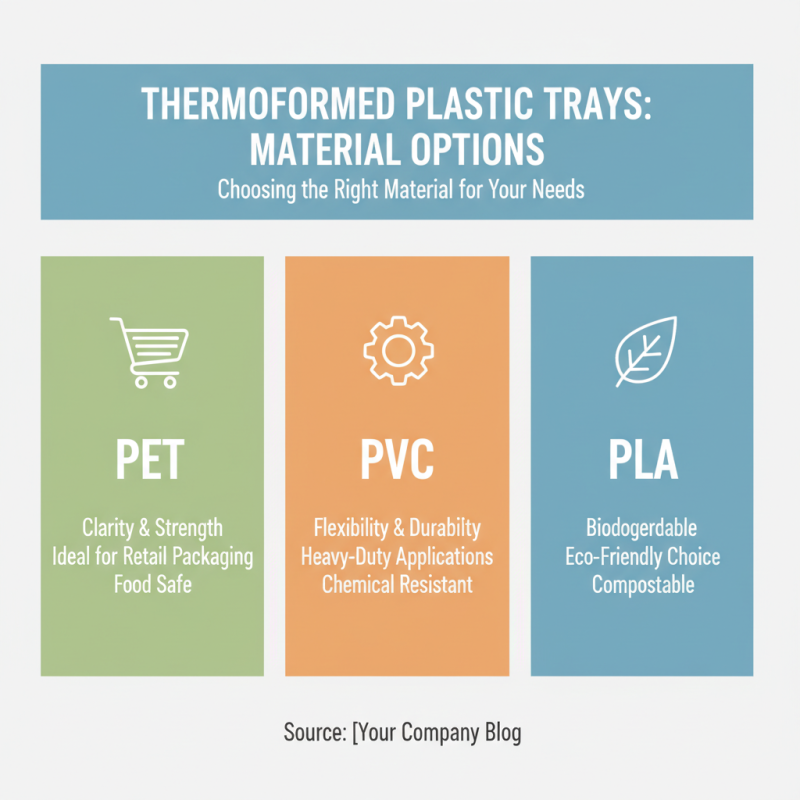
When evaluating material options for thermoformed plastic trays, it is essential to consider the specific needs of your application. Thermoformed trays are made from various plastic materials, each with unique properties. Common options include PET, PVC, and PLA. PET is known for its clarity and strength, making it ideal for retail packaging. PVC offers flexibility and durability, suitable for heavy-duty applications. PLA, being biodegradable, appeals to environmentally conscious choices.
Another crucial factor is the temperature resistance of the material. Some plastics can warp under high heat, while others maintain their shape. Assess the storage conditions and the types of products that will be placed in the trays. Not every material is suitable for all environments. Conducting tests with samples may help identify the right choice.
Consider the cost, but do not let it be the only determining factor. A cheaper option may save money upfront but can lead to higher replacement costs down the line. Look into the production process, as this can affect the quality and lifespan of your trays. Be mindful of how the material aligns with your brand's values. A material that is sustainable may resonate better with customers, while a more robust choice can enhance product protection.
Key Factors to Consider When Selecting Tray Dimensions
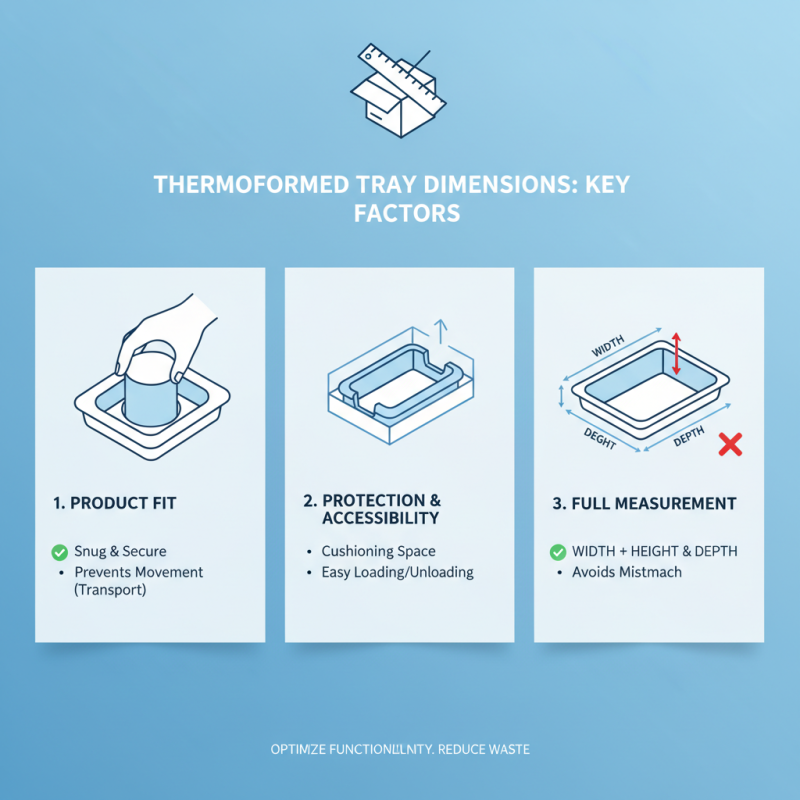
When selecting thermoformed plastic trays, tray dimensions play a crucial role in functionality. The right size ensures that your products fit securely without compromising protection or accessibility. An ideal tray should accommodate your items snugly, preventing movement during transport. However, many overlook measuring both the height and depth, not just the width. This can lead to a frustrating mismatch between tray and product.
Tips for choosing the right dimensions include assessing your product specifications. Make sure you have accurate measurements of length, width, and height. Always consider additional space for pads or dividers. Also, evaluate the stacking capability. A well-designed tray allows for efficient storage.
Reflect on your packaging process. Is there a chance that your chosen dimensions might complicate operations? Sometimes, flexibility in size can enhance overall efficiency. Consider revisiting your options and discussing them with experts in the field. Their insights may reveal dimensions you hadn't considered, improving your selection significantly.
Comparing Cost-Effectiveness of Different Thermoforming Processes
When comparing thermoforming processes, cost-effectiveness is crucial. Each process varies in material usage, labor needs, and production speed. Custom designs often inflate costs, while standard designs may save money. Understanding these factors can help in making informed choices.
The choice between vacuum forming and pressure forming impacts overall expenses. Vacuum forming is usually less expensive, suitable for shallow parts. However, it might not provide the surface finishing that pressure forming offers. For complex shapes, pressure forming uses more energy but ensures detailed precision. Evaluating the product's design complexity truly matters for cost management.
It's vital to keep in mind that material selection also influences costs. Different plastics have varied pricing and availability. Additionally, recycling options could affect long-term expenses. Balancing initial costs with potential savings on waste and durability is challenging. Regular review of supplier relationships may uncover better pricing. Making thoughtful decisions now can yield benefits later.
Reviewing Manufacturer Options and Customization Capabilities
When selecting thermoformed plastic trays, it’s crucial to consider the manufacturer’s options and customization capabilities. Reputable manufacturers often provide a variety of materials. These can range from high-density polyethylene to biodegradable options. Each material has its strengths and weaknesses, influencing the durability and environmental impact of the trays. Explore multiple choices to find a balance between performance and sustainability.
Customization is another key factor. Many manufacturers offer tailored solutions. You can choose the size, shape, and color that suits your product needs. However, some manufacturers may have limitations. For example, complex designs might increase production costs. Additionally, turnaround times can vary significantly. It’s essential to communicate your requirements clearly. This ensures that the final product meets your expectations effectively.
Evaluating a manufacturer's experience can enhance your confidence in their capabilities. Look for their track record with similar projects. Try to obtain feedback from previous clients. This step is vital in understanding their reliability. Always reflect on your options and evaluate what aspects matter most to you. This thoughtful approach can lead to better decisions in acquiring the right thermoformed trays.
How to Choose the Best Thermoformed Plastic Trays for Your Needs?
| Feature |
Option 1 |
Option 2 |
Option 3 |
| Material Type |
Polypropylene |
PVC |
PET |
| Thickness (mm) |
0.5 |
1.0 |
1.5 |
| Customization Options |
Color, Size |
Size, Print |
Shape, Color |
| Used For |
Food Packaging |
Industrial Parts |
Medical Supplies |
| Recyclability |
Yes |
Yes |
Yes |