
How to Choose an Automatic Blister Packing Machine
Choosing an automatic blister packing machine is a practical engineering decision, not a catalog comparison. The wrong line can leave tablets misaligned, seals inconsistent, or changeovers slower than expected. The right system fits the product, required output, available floor space, and quality controls. Small details matter: film width, cavity depth, feeding method, and how easily operators can reach the forming and sealing stations.
Industry data helps explain why careful selection matters. Grand View Research estimated the global blister packaging market at approximately USD 27.8 billion in 2023, reflecting broad demand across pharmaceutical and consumer-health packaging. That figure describes the market, not any one machine’s performance. Buyers should verify vendor claims using product-specific trials, documented output rates, and clear acceptance criteria. PMMI’s packaging machinery resources also emphasize evaluating equipment in relation to the complete production operation—not as an isolated purchase.
A useful machine should handle today’s products and leave room for realistic changeovers. Ask suppliers to demonstrate feeding with your actual tablets or capsules, show seal inspection, and explain cleaning and maintenance access. Request evidence for stated speeds; nominal rates can differ from sustained production. One limitation is easy to overlook: the most automated option is not always the most suitable. As packaging engineer John R. Henry puts it, “The best machine is the one that fits the process.” Treat that as a selection principle, not a verified published quotation. Compare total operating needs, test the proposed configuration, and document what the supplier has promised before choosing an automatic blister packing machine.
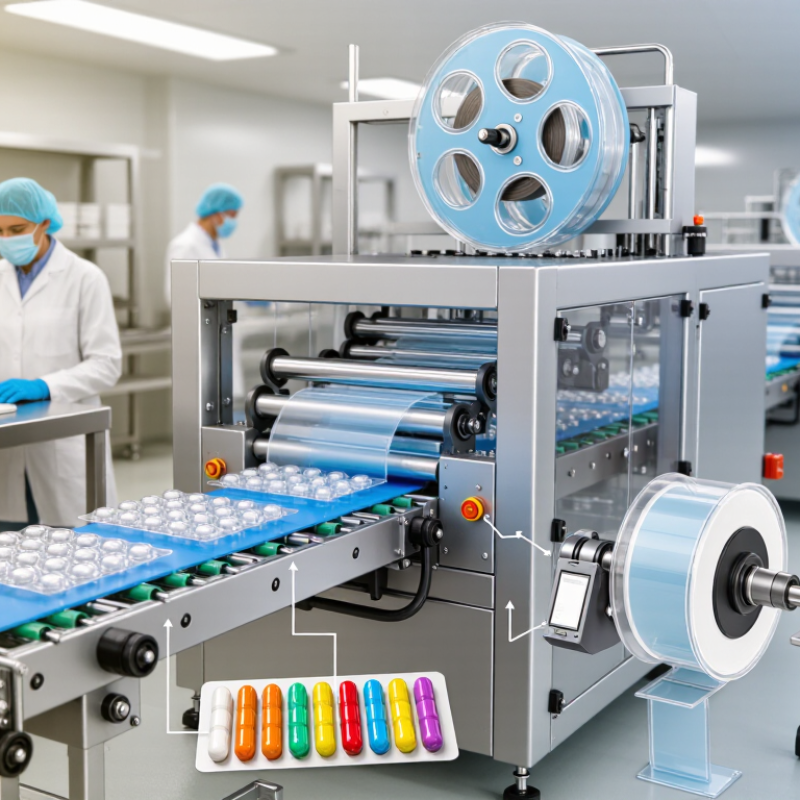
Define Product and Packaging Requirements
Before comparing automatic blister packing machines, describe the product as it actually arrives at the line. Record its dimensions, weight, shape, and any fragile edges. A tablet, small electronic part, and medical component can need very different pocket depths and feeding methods. Measure several samples, not just one. Product sizes can vary slightly, and that variation matters.
Then define the package. Choose the cavity size, forming material, lidding material, seal type, and number of items per blister. Check whether the product needs a tight fit, extra headspace, or protection from moisture and light. Bring material samples to a packaging trial. A pocket that looks generous on a drawing may still pinch a product when the web forms. It happens.
Also consider how products will be loaded and inspected. Count the required output per minute, but include time for refill, changeover, and routine checks. Ask how the machine handles misfeeds and whether operators can see incomplete pockets before sealing. If the product is unusually shaped, a simple feeding test can reveal more than a polished specification sheet. I would not assume that a standard format will work without testing; that assumption is easy to make, and sometimes costly. Keep the agreed product tolerances and packaging samples with the trial results for later comparison.
How to Choose an Automatic Blister Packing Machine - Define Product and Packaging Requirements
| Requirement area | Information to define | Example specification | Why it matters for machine selection |
|---|---|---|---|
| Product type | Product form, fragility, and handling characteristics | Round tablets, capsules, small medical components, or formed consumer goods | Determines the feeding method, product-contact parts, and degree of handling control required. |
| Product dimensions and tolerances | Length, width, height or diameter, and dimensional variation | Tablet: 10 mm diameter × 5 mm thick; verify the actual product range before tooling design. | Pocket size and forming depth must accommodate the product without excess movement or compression. |
| Product condition | Sensitivity to moisture, oxygen, light, heat, or static | Moisture-sensitive product requiring a high-barrier lidding and forming-material combination | May affect material choice, sealing conditions, storage protection, and required validation. |
| Product feeding and orientation | Bulk feeding, orientation needs, and permissible product overlap | Free-flowing tablets fed from a hopper into a product-specific counting and distribution system | A suitable feeder helps maintain accurate loading and reduces jams, damage, and empty pockets. |
| Forming web material | Material type, thickness, width, and forming characteristics | PVC, PVDC-coated PVC, or cold-form aluminum laminate, subject to product and regulatory requirements | The machine must support the selected material and its forming process, heating, and tooling requirements. |
| Lidding material | Material, thickness, print requirements, and sealing compatibility | Printed or plain aluminum lidding foil compatible with the selected forming web and seal coating | Material compatibility and correct sealing conditions are essential for package integrity. |
| Pack configuration | Units per blister, cavities per row, and blisters per finished card | 10 tablets per blister in a 2 × 5 arrangement | Defines cavity layout, indexing pattern, cutting format, and downstream cartoning needs. |
| Blister dimensions | Pocket dimensions, pitch, web width, and finished card size | Set from product dimensions, cavity layout, sealing land, and required separation between pockets. | These measurements guide forming, sealing, perforation, and cutting-tool design. |
| Production capacity | Required good packs per minute or per shift, including planned operating time | Target output established from demand, number of shifts, changeovers, and expected availability | Compare the required sustained output—not only the stated maximum speed—with the machine’s tested performance. |
| Package features | Perforation, tear features, child resistance, tamper evidence, or serialization | Perforated unit-dose blisters with lot number and expiry date printed or coded on the pack | Additional features can require specialized tooling, coding equipment, inspection, and validation. |
| Quality and compliance | Applicable regulations, documentation, inspection, and traceability requirements | For regulated products, define applicable GMP, validation, data-recording, and inspection requirements for the intended market. | Requirements influence machine design, controls, documentation, qualification, and acceptance testing. |
| Changeover and cleaning | Number of product formats, changeover frequency, and cleaning method | Multiple tablet sizes with planned format changes between production batches | Affects tooling storage, change-part design, access, cleaning time, and production availability. |
| Facility and utilities | Available floor space, electrical supply, compressed air, and environmental conditions | Confirm the installation footprint and utility specifications against the facility layout before purchase. | Ensures the machine can be installed, operated, and maintained at the intended site. |
Related Posts
-
2026 Best Blister Card Packaging Machine Options for Efficient Production?
-

What is the Importance of Blister Packaging Machine in Modern Manufacturing
-
2026 Best Blister Packaging Machine Choices for Your Business Needs?
-
What is a Blister Packing Machine and How Does It Work?
-
7 Best Strategies to Optimize Your Blister Machine Investment
-

How to Choose the Best Blister Machine for Your Business?