
Top 10 Types of Automatic Tray Sealing Machines
Demand for reliable food packaging is reshaping tray-sealing equipment. PMMI’s 2024 State of the Industry report identifies food and beverage as major drivers of packaging machinery investment. The report also highlights automation, labor efficiency, and flexible production as continuing priorities. These pressures are visible on factory floors, where operators manage different tray sizes, sealing films, and product temperatures during one shift.
An automatic tray sealing machine can provide repeatable sealing pressure, controlled heat, and cleaner production flow. Its performance depends on more than speed. Seal integrity, vacuum control, gas flushing, changeover time, and machine sanitation directly affect product quality. According to the FAO and WHO, food packaging supports protection, shelf-life management, and contamination control when designed and operated correctly. That makes equipment selection a technical decision, not simply a purchasing comparison.
Market research from Grand View Research and MarketsandMarkets also points to continued growth in food packaging automation, especially for ready meals, fresh produce, meat, and convenience foods. However, broad market forecasts should be read carefully. They cannot predict every factory’s needs. A compact semi-automatic unit may outperform a high-speed line in a small facility. Meanwhile, a centralized system may suit large processors with strict production targets.
This guide examines the top 10 types of automatic tray sealing machines, including vacuum, MAP, rotary, inline, and specialized systems. Each type has practical strengths and limitations. The right choice may depend on tray material, daily output, cleaning routines, and available floor space. Small details matter. A two-second changeover difference can become hours of lost production each week.
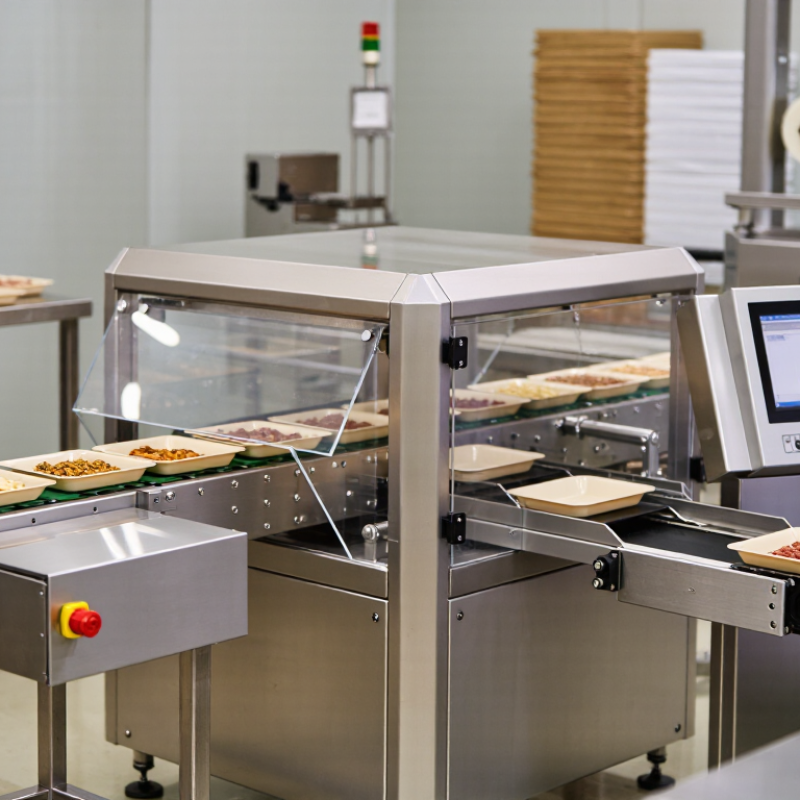
What Automatic Tray Sealing Machines Are and How They Work
Automatic tray sealing machines close preformed trays with a heat-sealed film. They are used for fresh food, ready meals, produce, and medical packaging. A typical line denests trays, checks their position, fills them, and removes surface contamination. The machine then feeds film across the tray rim. A heated sealing plate applies controlled pressure and temperature. Knives trim the film, while sensors reject damaged or poorly sealed packs.
The main configurations include inline, rotary, vacuum, modified-atmosphere, vacuum-skin, and heat-only tray sealers. Some systems inject nitrogen or carbon dioxide before sealing. This reduces oxygen and can support product quality. Others pull a vacuum first, creating tight skin packaging. The choice depends on tray material, product shape, seal width, speed, and shelf-life goals. It is not magic.
Smithers’ The Future of Global Packaging to 2028 forecasts the packaging market to approach 1.2 trillion dollars by 2028. That growth increases pressure for faster, more consistent automation. PMMI industry reports also identify labor availability and flexible production as key automation drivers. In practice, however, high speed can expose small weaknesses. A curled tray rim, wet flange, or incorrect film tension may cause leaks. Operators still need seal-temperature checks, pressure verification, and routine calibration. This part is often underestimated. A machine can be advanced and still produce unreliable packs when cleaning, loading, or inspection standards are inconsistent.
Top 10 Types of Automatic Tray Sealing Machines - What Automatic Tray Sealing Machines Are and How They Work
| No. | Machine Type | How It Works | Typical Automation Level | Common Tray Materials | Typical Throughput* | Best-Suited Products | Main Advantage | Typical Limitation |
|---|---|---|---|---|---|---|---|---|
| 1 | Automatic Inline Tray Sealer | Trays move continuously on a conveyor, where film is aligned, heat-sealed, cut, and discharged automatically. | Fully automatic; conveyor, film-feed, sealing, cutting, and discharge functions are integrated. | Plastic, aluminum, paperboard, and multilayer barrier trays. | 20–60 trays/minute | Prepared meals, fresh produce, meat, seafood, and dairy products. | Good balance of flexibility, automation, and production speed. | Requires consistent tray positioning and a stable product line. |
| 2 | Automatic Rotary Tray Sealer | Multiple trays are indexed through rotating stations for loading, gas treatment, sealing, film cutting, and unloading. | Fully automatic with programmable indexing and multi-station operation. | Rigid plastic, aluminum, and multilayer barrier trays. | 40–150 trays/minute | High-volume food production and standardized tray formats. | High output from a compact footprint. | Changeovers can take longer when tray sizes vary significantly. |
| 3 | Automatic Vacuum Tray Sealer | Air is removed from the sealing chamber before the film is heat-sealed to the tray. | Fully automatic chamber evacuation, sealing, cutting, and product handling. | Barrier plastic and multilayer trays suitable for vacuum packaging. | 20–100 trays/minute, depending on chamber size and tray count. | Fresh meat, poultry, seafood, cheese, and products needing reduced oxygen exposure. | Reduces residual air and can help protect product quality. | Longer cycles than standard heat sealing and possible product compression. |
| 4 | Automatic Modified Atmosphere Packaging (MAP) Sealer | The tray is evacuated or flushed with a controlled gas mixture, then sealed with a high-barrier film. | Fully automatic gas dosing, sealing, film cutting, and quality monitoring. | High-barrier plastic, aluminum, and multilayer trays. | 30–120 trays/minute | Fresh meat, bakery goods, ready meals, produce, and dairy products. | Supports controlled headspace conditions and extended shelf-life programs. | Needs gas-supply equipment, suitable films, and accurate leak control. |
| 5 | Automatic Tray Skin Packaging Machine | A flexible film is heated and drawn tightly over the product and tray, creating a close-fitting skin pack. | Fully automatic film heating, vacuum forming, sealing, cutting, and discharge. | Rigid plastic, paperboard, and coated trays compatible with skin films. | 15–60 trays/minute | Meat, fish, cheese, premium ready meals, and products requiring strong presentation. | Provides product visibility, close film contact, and strong package appearance. | Film selection and product height must be carefully matched to the tooling. |
| 6 | Automatic Shrink-Film Tray Sealer | The machine seals a shrinkable film to the tray; subsequent heat causes the film to contract around the package. | Fully automatic sealing with an integrated or connected shrink tunnel. | Heat-shrinkable multilayer films and compatible plastic trays. | 20–80 trays/minute | Meat, poultry, seafood, produce, and leak-resistant retail packs. | Produces a tight package with added protection against handling and leakage. | Uses additional heat energy and may require a separate shrink tunnel. |
| 7 | Automatic High-Speed Multi-Lane Tray Sealer | Several trays are processed in parallel through multiple lanes and a shared or multi-cavity sealing tool. | Fully automatic with synchronized conveyors, sensors, filling lines, and robotic packing options. | Plastic, paperboard, aluminum, and high-barrier trays. | 100–300+ trays/minute | Large-scale production of standardized meals, snacks, produce, and protein products. | Maximizes output where product format and demand are stable. | Higher capital cost and less flexibility for frequent format changes. |
| 8 | Automatic Filling-and-Sealing Line | Empty trays are conveyed through dosing or filling equipment before being transferred automatically to the sealing section. | Fully automatic product dosing, tray handling, sealing, coding, inspection, and discharge. | Plastic, aluminum, paperboard, and multilayer trays. | 20–100 trays/minute | Yogurt, sauces, prepared foods, desserts, snacks, and portion-controlled products. | Combines precise filling and sealing into one coordinated production process. | Performance depends on both the filling system and the sealing system. |
| 9 | Automatic Ultrasonic Tray Sealer | High-frequency mechanical vibrations generate localized heat at the film-to-tray sealing interface. | Automatic sealing, film handling, indexing, cutting, and control-system operation. | Selected thermoplastic trays and compatible multilayer sealing films. | 20–100 trays/minute, depending on tray design and seal area. | Specialty food, medical, laboratory, and packaging applications requiring localized sealing. | Can reduce external heat exposure and seal through limited surface contamination. | Requires precise material compatibility, tooling, and process validation. |
| 10 | Automatic Hygienic or Cleanroom Tray Sealer | The sealing process is enclosed or configured for controlled environments, with hygienic construction and minimized contamination risks. | Fully automatic, with monitored sealing parameters, controlled access, and optional inspection systems. | Validated plastic, aluminum, paperboard, and high-barrier trays. | 10–60 trays/minute | Medical products, laboratory items, high-care foods, and contamination-sensitive products. | Supports strict hygiene requirements and repeatable sealing conditions. | Higher purchase, cleaning, validation, and maintenance requirements. |
*Typical throughput ranges are general industry estimates. Actual performance depends on tray dimensions, product characteristics, sealing method, film specifications, number of cavities, gas-cycle requirements, and operator or line configuration.
Related Posts
-
Why Choose a Tray Sealer Packaging Machine?
-
2026 Best Blister Packaging Machine Choices for Your Business Needs?
-
2025 Guide: How to Choose the Best Stock Clamshell Packaging for Your Products
-
Top 10 Benefits of Blister Card Packaging for Global Buyers?
-

Exploring the Benefits of Using an Automatic Blister Packing Machine in Modern Manufacturing
-
What is a Packaging Sealing Machine? Discover Its Benefits and Uses