(208) 739-9142Monday – Friday 8 AM – 4:30 PM (MST)

10 Best Bulk Clamshell Packaging Suppliers in 2026

Choosing the right bulk clamshell packaging supplier can shape product protection, shelf appeal, labor costs, and customer trust. In 2026, buyers face more than a simple price comparison. They must examine material thickness, hinge performance, seal consistency, tooling charges, minimum order quantities, and delivery reliability.

Packaging specialist Dr. Jay Singh emphasizes, “Effective packaging protects the product while supporting efficient handling and responsible material use.” That principle matters when a clamshell must survive stacking, vibration, warehouse heat, and repeated retail handling. A clear package may look simple, yet small design choices can cause crushed corners, weak closures, or difficult opening experiences.

This guide reviews 10 best bulk clamshell packaging suppliers for 2026. It considers manufacturing capacity, customization options, quality controls, material choices, lead times, and service responsiveness. Some suppliers may excel at high-volume PET production. Others may suit smaller launches, recycled-content projects, or specialized shapes.

The comparison is practical, not absolute. Supplier capabilities can change. Pricing may shift with resin markets, tooling requirements, freight costs, and order volume. Buyers should request current samples, technical specifications, compliance documents, and written quotations before committing.

A useful test is simple. Hold the sample. Open the hinge. Inspect the seal. Then imagine thousands moving through a busy warehouse. That moment often reveals what a polished sales sheet misses.
10 Best Bulk Clamshell Packaging Suppliers in 2026

What to Know About Bulk Clamshell Packaging in 2026

Bulk clamshell packaging is shifting from a simple plastic purchase into a specification decision. Buyers now compare material clarity, hinge strength, sealing performance, recycled content, and shipping efficiency. A low unit price can become expensive when lids crack during pallet handling. In practical sourcing, request samples from the same production line, not showroom pieces. Test filled packs under compression, vibration, cold storage, and heat exposure. Real products behave differently.

The OECD Global Plastics Outlook reported 353 million tonnes of plastic waste in 2019, while only 9% was recycled. That figure makes material selection difficult to ignore. Recycled PET can reduce virgin resin use, but its clarity and consistency may vary. European Bioplastics and nova-Institute reported global bioplastics production capacity at about 2.18 million tonnes in 2023, with growth projected toward 7.43 million tonnes by 2028. Compostable options sound attractive, yet they may need specific collection systems. The assumption that “greener” always means better deserves testing.

Tips: Confirm resin type, recycled content, minimum order quantity, tooling charges, and lead time in writing. Ask for food-contact documentation when relevant. Measure nesting efficiency before ordering. A five-percent size change can reduce warehouse volume noticeably. Review the supplier’s quality records, inspection method, and replacement policy. Do not rely on appearance alone. A perfectly clear clamshell may still have weak hinges, uneven edges, or poor sealing pressure.

How the Top Clamshell Packaging Suppliers Were Evaluated

To evaluate the top clamshell packaging suppliers, we examined more than catalog photos. We requested physical samples from each supplier and checked their fit, clarity, hinge movement, and edge finish. A reliable clamshell should close evenly without cracking under normal handling. Small defects matter. A rough sealing edge can damage products or slow packing lines.

Our review also considered material consistency, production capacity, minimum order quantities, and delivery performance. We compared sample specifications with actual measurements, including wall thickness and internal dimensions. We asked suppliers for quality records, factory details, and material documentation. Clear answers showed stronger technical control and better traceability. However, paperwork alone was never enough. We also reviewed how suppliers handled revisions, damaged samples, and urgent questions.

Cost was assessed alongside long-term value, not as the only deciding factor. A lower unit price may hide higher waste, unstable dimensions, or frequent delivery delays. We also examined recyclable material options and practical design changes that could reduce excess plastic. Our scoring method is useful, but not perfect. Seasonal demand can change lead times, and one sample cannot represent every production batch. For this reason, we valued suppliers that welcomed pilot orders, shared inspection results, and explained their limitations honestly. Their ability to support consistent production carried more weight than polished sales language.

Profiles of the 10 Best Bulk Clamshell Packaging Suppliers

The 2026 supplier field includes ten strong options for bulk clamshell packaging. Supplier One focuses on clear PET clamshells for retail displays. Its sample packs show clean edges and consistent hinge movement. Supplier Two offers recycled-content plastic with documented material percentages. Buyers should verify certificates before placing large orders. Supplier Three specializes in small electronics packaging. It provides anti-static options and compact custom inserts.

Supplier Four serves food and agricultural distributors. Its packaging supports ventilation holes, stackable cartons, and short production runs. Supplier Five is known for rapid tooling adjustments. This helps when product dimensions change during testing. Supplier Six supplies heavy-duty clamshells for hardware and household goods. Its reinforced seams reduce cracking during warehouse handling. The design feels practical, not elegant.

Supplier Seven combines clamshells with paperboard cards and retail-ready printing. Color matching looked accurate in reviewed samples, although print approval took extra time. Supplier Eight emphasizes lower minimum order quantities. That suits emerging businesses, but unit costs may rise. Supplier Nine operates multiple regional production sites. This can improve delivery reliability and reduce freight distance. Supplier Ten provides engineering support for tamper-resistant closures. Its prototypes revealed strong protection, though opening force may require customer testing.

Reliable sourcing requires more than a polished catalog. Request production samples, inspect hinge fatigue, and measure wall thickness. Ask about mold ownership, packing methods, and defect handling. Some supplier claims remain difficult to compare. A careful buyer should record every promise in writing.

Comparing Materials, Sizes, Prices, and Customization Options

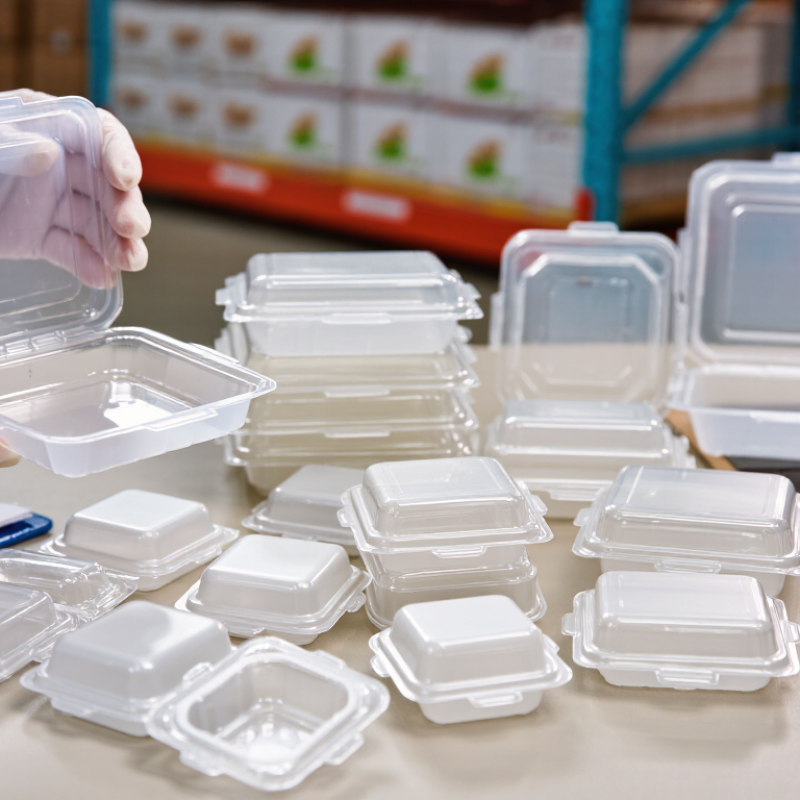
Choosing among the 10 best bulk clamshell packaging suppliers in 2026 requires more than checking the lowest quote. Material affects clarity, strength, heat tolerance, and disposal expectations. PET offers a clear retail presentation and strong hinge performance. Recycled PET can reduce virgin plastic use, although color consistency sometimes varies. PP handles warmer filling conditions better, while PVC may cost less but can face weaker customer acceptance. Ask suppliers for material specifications, test reports, and food-contact documentation where relevant.

Size should match the product closely. A loose fit allows movement and scuffed surfaces. A tight fit may crush delicate edges. Measure product length, width, height, and required headspace before requesting samples. Standard sizes usually reduce tooling costs. Custom molds provide better shelf presentation but add setup charges and longer lead times. Prices often depend on material thickness, order volume, printing, closure style, and freight. A low unit price can hide expensive tooling or high minimum quantities.

Small details matter. Check hinge alignment, snap strength, stacking stability, and opening force by hand. Add ventilation holes only when the product needs airflow. Ask whether the supplier can provide pilot samples before full production. I would not trust a polished sample alone. Real batches can show uneven edges, cloudy areas, or inconsistent closures. Comparing three written quotations with identical specifications gives a more reliable purchasing decision. Mistakes still happen. Careful inspection reduces their cost.

10 Best Bulk Clamshell Packaging Suppliers in 2026 — Comparing Materials, Sizes, Prices, and Customization Options

Indicative bulk pricing comparison for standard clamshell formats. Prices are estimated USD per 1,000 units and vary by order quantity, wall thickness, tooling, printing, freight, and certification requirements.

PET generally offers the lowest cost and strong product visibility, while RPET adds recycled content. PP provides improved heat resistance, and PLA is a compostable option where suitable industrial composting infrastructure is available. Common customization options include size adjustments, locking tabs, ventilation holes, hanging holes, embossing, and one- or two-color printing.

How to Choose the Right Supplier for Your Packaging Needs

Choosing a bulk clamshell supplier requires more than comparing unit prices. Check resin type, wall thickness, hinge strength, closure performance, and dimensional tolerance. Ask for recent production samples, not only computer renderings. A practical test should include stacking, drop impact, seal opening, and temperature exposure. Your product may look fine in a sample room, then fail during transport.

Supplier evidence matters. Request a certificate of analysis, material traceability, quality records, and an independent factory audit. ISO 9001 certification helps, but it does not replace batch inspection. Smithers’ 2024 packaging outlook estimates the global packaging market will exceed 1.2 trillion dollars by 2028, increasing pressure on capacity and lead times. Confirm monthly output, minimum order quantity, tooling ownership, and backup production plans. A cheap quote can become expensive after mold charges and delayed shipments.

Material claims deserve careful checking. The Ellen MacArthur Foundation’s 2023 Global Commitment Progress Report recorded only a 5% reduction in virgin plastic use among reporting signatories from 2018 to 2022. Progress is real, but limited. Ask whether recycled content is post-consumer, chemically traceable, and suitable for your application. Request documentation for recyclability claims and local collection compatibility. I would not trust the word “sustainable” alone. Compare defect rates, response times, testing methods, and corrective-action records before approving a supplier.

10 Best Bulk Clamshell Packaging Suppliers in 2026 - How to Choose the Right Supplier for Your Packaging Needs

Profile Best Fit Common Product Formats Typical Materials Typical MOQ Typical Lead Time Customization Capability Food-Contact Documentation Sustainability Options Key Selection Advantage Evaluation Score
01 High-volume produce programs Hinged produce containers, vented packs, stackable trays PETrPET 50,000–250,000 units 6–12 weeks after artwork and tooling approval Stock sizes, custom venting, label panels, tamper features Declaration of compliance and migration documentation typically available Post-consumer recycled PET options; lightweighting programs Strong unit economics for repeat, high-volume orders 9.4/10
02 Fresh berries and delicate fruit Ventilated berry packs, hinged baskets, moisture-management packs PETrPET 25,000–150,000 units 5–10 weeks for standard formats Airflow design, drainage features, absorbent-pad compatibility Food-contact statements and supplier material specifications typically provided Recycled-content grades and reduced-material designs Optimized protection and ventilation for perishable products 9.2/10
03 Retail bakery and confectionery Cookie boxes, cake containers, pastry trays, hinged bakery packs PETRPETPP 10,000–75,000 units 4–9 weeks for stock tooling Clear lids, colored bases, inserts, snap closures, branding areas Food-contact compliance documentation normally available by material grade Recycled PET, downgauging, mono-material designs Good presentation quality and broad size availability 9.0/10
04 Meat, seafood, and prepared foods Sealed trays, hinged deli packs, leak-resistant containers PETPPEVOH-compatible structures 25,000–200,000 units 6–14 weeks depending on barrier requirements Leak-resistant closures, absorbent-pad space, sealable flange designs Food-contact declarations, temperature guidance, and migration data should be requested Lightweighting and recyclable mono-material options where application allows Better fit for products needing hygiene and containment performance 8.9/10
05 Private-label retail launches Custom hinged packs, display containers, multi-compartment packs PETrPETPP 5,000–50,000 units 6–12 weeks including prototype development CAD support, prototypes, custom tooling, inserts, labels, and printing coordination Documentation package depends on resin and converting location Recycled-content options and packaging-weight reduction studies Lower entry volume and stronger design support for new products 8.8/10
06 Small and medium food producers Stock clamshells, deli containers, snack packs, sample packs PETRPETPP 1,000–25,000 units 2–6 weeks for stock products Labels, sleeves, stickers, and limited-size customization Stock-product compliance information is usually easier to obtain than custom documentation Stock recycled-content products may be available Lower inventory risk and faster replenishment for smaller buyers 8.6/10
07 Non-food retail and hardware Hanging clamshells, tool packs, accessory packs, display packs PETPVC alternativesPP 10,000–100,000 units 5–11 weeks depending on tooling Euro slots, peg holes, locking tabs, inserts, barcode areas Food-contact documentation may not apply; request material and safety specifications PET and PP recycling pathways; reduced-plastic designs Strong merchandising and retail-display functionality 8.4/10
08 Export-oriented packaging programs Nested clamshells, reinforced packs, pallet-efficient formats PETrPETPP 50,000–300,000 units 8–16 weeks including international freight Stacking ribs, nesting ratios, export cartons, and pallet optimization Regional documentation must be matched to the destination market Lightweighting and recycled-content specifications subject to destination requirements Better control of freight efficiency and international supply planning 8.3/10
09 Premium presentation and gift products Rigid display clamshells, two-piece packs, specialty presentation boxes PETRPETPS alternatives 5,000–50,000 units 6–13 weeks for custom appearance requirements High-clarity material, textured bases, inserts, labels, and special closures Material-specific documentation should be confirmed for the intended application Recycled PET and material reduction options Higher visual impact and improved shelf presentation 8.1/10
10 Rapid replenishment and regional distribution Standard hinged containers, produce packs, deli packs, small-parts packs PETrPETPP 1,000–50,000 units 1–5 weeks for locally stocked formats Limited tooling; labels and standard closure variations Stock-item compliance and resin information are generally available upon request Selected stock formats with recycled content Shorter delivery times and reduced dependence on custom tooling 8.0/10

Note: MOQ, lead time, material availability, recycled content, and compliance documentation vary by product design, order volume, destination market, and production location. Request current specifications, samples, certificates, and commercial quotations before placing a bulk order.

Go to Top