(208) 739-9142Monday – Friday 8 AM – 4:30 PM (MST)

Why Use Bulk Clamshell Packaging for Global Sourcing?

Global sourcing rarely fails because a product cannot be made. It often fails when packaging cannot travel reliably. Bulk clamshell packaging offers a practical starting point for that challenge. Its transparent form protects small products while keeping them visible during inspection, storage, and retail handling. For buyers, this visibility can reduce unnecessary opening and repacking.

Packaging consultant Thomas Hine is often associated with the observation, “Packaging is the product.” That statement remains useful here. A clamshell is not merely a plastic shell. It influences freight volume, shelf presentation, labor time, damage rates, and customer confidence. In global sourcing, those details matter. A strong package may use less space, stack more consistently, and arrive with fewer crushed corners.

Still, bulk clamshell packaging is not a perfect answer. It may create recycling concerns, require specialized sealing equipment, or add costs when tooling changes. Small design decisions matter. Hinge strength, resin selection, wall thickness, and carton dimensions should be tested before large production runs. A sample that survives a warehouse shelf may fail after vibration, humidity, and repeated handling.

Reliable sourcing requires more than a low unit price. Suppliers should provide material specifications, quality records, production samples, and clear inspection criteria. Buyers should also confirm regional packaging requirements before shipment. The best solution is measurable, not assumed. That is why this article examines how bulk clamshell packaging can support global sourcing, where it performs well, and where careful reconsideration remains necessary.
Why Use Bulk Clamshell Packaging for Global Sourcing?

Defining Bulk Clamshell Packaging Through UNEP’s 36% Packaging-Use Share

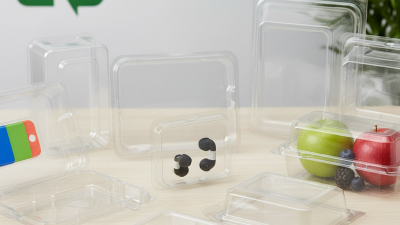
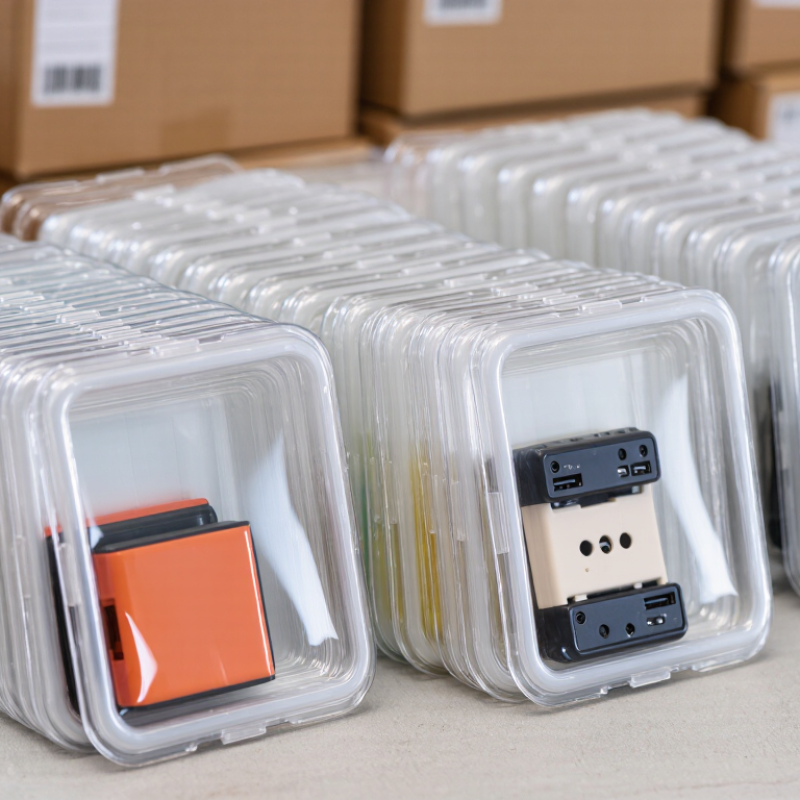
Bulk clamshell packaging means rigid, hinged containers sourced in quantity for repeated product protection. Unlike loose bags or simple cartons, each clamshell holds one item in a shaped cavity. The package can display the product while limiting dust, scratches, and handling damage. For global sourcing teams, that structure supports consistent packing across factories and distribution centers.

The definition matters because UNEP identifies packaging as roughly 36% of global plastic use. This share makes packaging decisions impossible to treat as a minor purchasing detail. Bulk clamshells may improve protection and reduce product loss, but they also create material and disposal concerns. A thinner design is not automatically better. It may crack during pallet movement and increase replacement waste.

Measure the full journey. Buyers should compare resin type, wall thickness, cavity size, shipping density, and recovery options. A warehouse test can reveal practical issues: lids popping open, labels peeling in humidity, or cartons leaving unused space. Those details affect cost and emissions. Clear specifications also reduce inconsistent production between suppliers.

Still, clamshells are not suitable for every product. Some items need flexible packs or reusable containers. A responsible sourcing decision balances protection, material use, worker handling, and local recovery systems. The 36% figure is a warning, not a design formula. Packaging performance must be proven before volume orders begin.

Comparing PET, rPET, PVC, and PP Using ASTM D7611 Resin Codes

Why Use Bulk Clamshell Packaging for Global Sourcing?

ASTM D7611/D7611M identifies PET as resin code 1, PVC as 3, and PP as 5. rPET is not a separate code. It remains PET, code 1, despite its recycled content. This distinction matters during audits, customs documentation, and recycling discussions. PET offers strong clarity and useful stiffness for retail clamshells. rPET can reduce dependence on virgin feedstock, but its color and impact strength may vary between batches. PVC provides clarity and rigidity, yet its additives and recycling pathways require careful regional review. PP tolerates heat better and resists hinges and repeated flexing. It usually looks less glass-clear.

The scale is significant. PlasticsEurope reported global plastic production of 400.3 million tonnes in 2022. The OECD Global Plastics Outlook estimated that only 9% of plastic waste was recycled in 2019. These figures make material selection more than a purchasing detail. They affect transport weight, factory sorting, and end-of-life claims. In bulk sourcing, I would request resin-code markings, recycled-content evidence, thickness data, and drop-test results. Small details matter. A thin PET shell may crack around a punched hole, while a PP hinge can fatigue after repeated opening. My own caution is simple: rPET sounds automatically better, but unstable supply or poor sorting can undermine that advantage. ASTM codes identify the resin family, not the complete environmental profile.

Why Use Bulk Clamshell Packaging for Global Sourcing? - Comparing PET, rPET, PVC, and PP Using ASTM D7611 Resin Codes
Material ASTM D7611 Resin Code Typical Clamshell Characteristics Transparency Barrier and Protection Relative Heat Performance Global Sourcing Considerations Common Use Cases
PET
Polyethylene terephthalate
1 Rigid, lightweight, impact-resistant, and suitable for thermoformed clear packaging. High clarity and gloss; supports product visibility. Good protection against moisture and moderate oxygen exposure; helps protect contents from dust and handling damage. Moderate; standard PET clamshells are generally intended for ambient or cool-chain applications rather than high-temperature filling. Widely available in international converting markets. Confirm sheet thickness, hinge design, sealing method, and applicable food-contact requirements. Produce, bakery items, small consumer goods, electronics accessories, and retail display packs.
rPET
Recycled PET
1 PET made partly or wholly from recycled material; performance depends on recycled content, purification, and sheet quality. Can be clear, but may show a slight gray, blue, or yellow tint depending on feedstock and processing. Generally similar to PET when properly processed, although consistency can vary with recycled feedstock. Comparable to PET for many ambient applications; verify thermal performance for demanding uses. ASTM D7611 identifies rPET as resin code 1; the code does not indicate recycled content. Request recycled-content documentation, chain-of-custody evidence, batch controls, and destination-market compliance. Retail clamshells and trays where recycled-content targets, material recovery, and product visibility are priorities.
PVC
Polyvinyl chloride
3 Can be rigid, clear, and easy to thermoform; formulation strongly affects flexibility and durability. Good clarity and surface appearance in rigid grades. Good moisture and oil resistance; useful for protecting products during handling and distribution. Moderate; avoid unsuitable heat exposure because PVC can deform or degrade when overheated. Availability and end-of-life acceptance vary by country and retailer. Check local restrictions, additives, plasticizers, and recycling infrastructure before selecting PVC. Clear retail packaging, stationery, hardware, and selected non-food consumer products.
PP
Polypropylene
5 Lightweight, tough, fatigue-resistant, and suitable for living hinges and repeated flexing. Usually translucent or semi-clear; high-clarity grades are available but may not match PET clarity. Good moisture resistance and strong resistance to many chemicals; oxygen barrier is generally lower than PET without specialized structures. Better heat resistance than PET or PVC in many applications; exact limits depend on grade, wall thickness, and package design. Often selected for durability and heat tolerance. Confirm local collection systems, food-contact rules, hinge fatigue performance, and compatibility with automated packing equipment. Reusable-style packs, food containers, household items, tools, and products requiring a flexible hinge.
Resin-code note: ASTM D7611 resin identification codes identify the primary resin family and are not a complete statement of recyclability, recycled content, food-contact status, or acceptance in a specific country’s collection system. rPET remains PET and therefore uses code 1.
Bulk sourcing checklist: Confirm target-market regulations, recycled-content claims, material thickness, package dimensions, hinge and closure performance, sealing requirements, pallet efficiency, temperature exposure, inspection standards, and end-of-life guidance before placing a large order.

Calculating Landed Cost with MOQ, Cube, Freight, and Drewry WCI Data

Why Use Bulk Clamshell Packaging for Global Sourcing?

Bulk clamshell sourcing can reduce unit cost, but landed cost tells the real story. A practical model includes product price, MOQ, carton cube, ocean freight, duties, port fees, inland delivery, and inspection. For example, 10,000 units at $0.18 each cost $1,800 before shipping. If each carton measures 0.048 cubic meters, 50 cartons occupy 2.4 cubic meters. A $2,400 ocean shipment adds $0.24 per unit. That changes the apparent saving quickly.

Freight should be tested against published market data. Drewry’s World Container Index is a weekly benchmark covering major container routes, and its sharp movements during 2024 showed why old quotations become unreliable. UNCTAD’s Review of Maritime Transport 2024 also reports that more than 80% of global merchandise trade by volume moves by sea. Ocean freight matters. However, destination charges can matter more for small shipments. Add a realistic buffer for drayage, handling, customs clearance, and storage.

MOQ creates another trade-off. A factory may offer a lower price at 20,000 units, yet the added inventory can consume warehouse space for months. Measure the actual nested cube, not the catalog dimension. Include lids, separators, outer cartons, and damaged units. Small errors multiply.

The model is useful, not perfect. Packaging compression, seasonal congestion, and exchange-rate changes can distort the result. Recheck the WCI figure using the quotation date, lane, container type, and validity period. Cite sources clearly: Drewry, World Container Index, weekly data; UNCTAD, Review of Maritime Transport 2024.

Verifying Global Compliance Under EU PPWR and FDA Food-Contact Rules

Why Use Bulk Clamshell Packaging for Global Sourcing?

Verifying compliance matters more than simply choosing a clear clamshell. The EU generated 186.5 kilograms of packaging waste per person in 2022, according to Eurostat. PPWR now pushes suppliers toward recyclable packaging, reduced material use, and stronger traceability. Its main obligations begin applying from August 2026. A bulky package may therefore create cost and compliance risks.

FDA food-contact compliance requires careful material verification. A clamshell’s resin, colorants, coatings, adhesives, and additives must match the intended food-contact conditions. The FDA’s Food Contact Substance Notification inventory is useful, but it does not approve every finished package automatically. Suppliers should provide a declaration of compliance, migration testing, resin identification, and production traceability. Bulk sourcing helps standardize these records across factories. Still, one overlooked additive can weaken the entire file. This happens more often than expected.

Tips: Request the exact bill of materials before approval. Check hot-fill, frozen-food, and fatty-food conditions separately. Compare test reports with the actual thickness and forming process. Keep retained samples from each production lot. Eurostat data shows the pressure clearly. Recycling claims need evidence, not attractive wording. I have seen technically recyclable packs fail practical sorting tests. That gap deserves honest review.

Assessing End-of-Life Claims Against OECD’s 9% Plastics-Recycling Rate

Bulk clamshell packaging can protect small products during long international shipments. Its rigid shape reduces crushing, moisture exposure, and surface damage on crowded pallets. However, protection is only one part of responsible sourcing.

OECD data indicates that roughly 9% of plastic waste is recycled globally. This figure challenges broad end-of-life claims. A clamshell may be technically recyclable, yet local facilities may reject its polymer, size, label, or attached material. The result can be landfill disposal, even when the package carries a recycling message. Sourcing teams should request material specifications, recycling evidence, and region-specific recovery data. They should also check whether the package separates easily from paper inserts or metal fasteners. These details matter.

Tips: Ask suppliers for post-use testing. Confirm accepted materials with local recyclers. Compare recycled content, transport protection, and disposal access. A lighter pack is not automatically better. It may crack during handling and increase product waste. A stronger pack may protect goods but create more plastic waste. The trade-off is uncomfortable. It deserves measurement, not optimism. Claims should be reviewed against actual collection systems, not only design intentions.

Go to Top